Walk-in shower trends and frameless shower hardware are moving rapidly toward larger glass panels, open layouts, and minimalist detailing. Walk-in showers are becoming an increasingly popular feature in modern bathroom design. With their open layouts, clean glass surfaces, and minimalist appearance, they offer a combination of functionality, accessibility, and contemporary style.
As bathroom designs evolve in 2026, larger shower spaces and frameless glass enclosures are attracting more attention from homeowners, designers, contractors, and shower enclosure manufacturers.
However, larger glass panels also create new requirements for shower door hardware. Choosing the right glass hinges, glass clamps, support bars, and U-channels is essential for achieving a stable, durable, and visually appealing installation.
In this guide, PH Hardware explores the latest walk-in shower trends and explains how to select the right hardware for large frameless glass panels.
1. 2026 Walk-In Shower Trends: What Is Driving the Market?
Recent bathroom industry research highlights several important developments in shower design.
According to the 2026 U.S. Houzz Bathroom Trends Study, published in November 2026:
- 58% of homeowners upgrading their showers increased the shower size.
- 80% of upgraded shower doors were frameless.
- 51% of homeowners chose hinged shower doors.
- 24% selected curbless shower designs.
These findings highlight growing interest in larger, more open shower spaces and minimalist glass enclosures.
The 2026 NKBA Bath Trends Report also identifies wellness, accessibility, personalized design, and larger shower spaces as important bathroom design directions.
For shower hardware manufacturers and distributors, these trends create opportunities in several product categories.
Larger Frameless Glass Panels
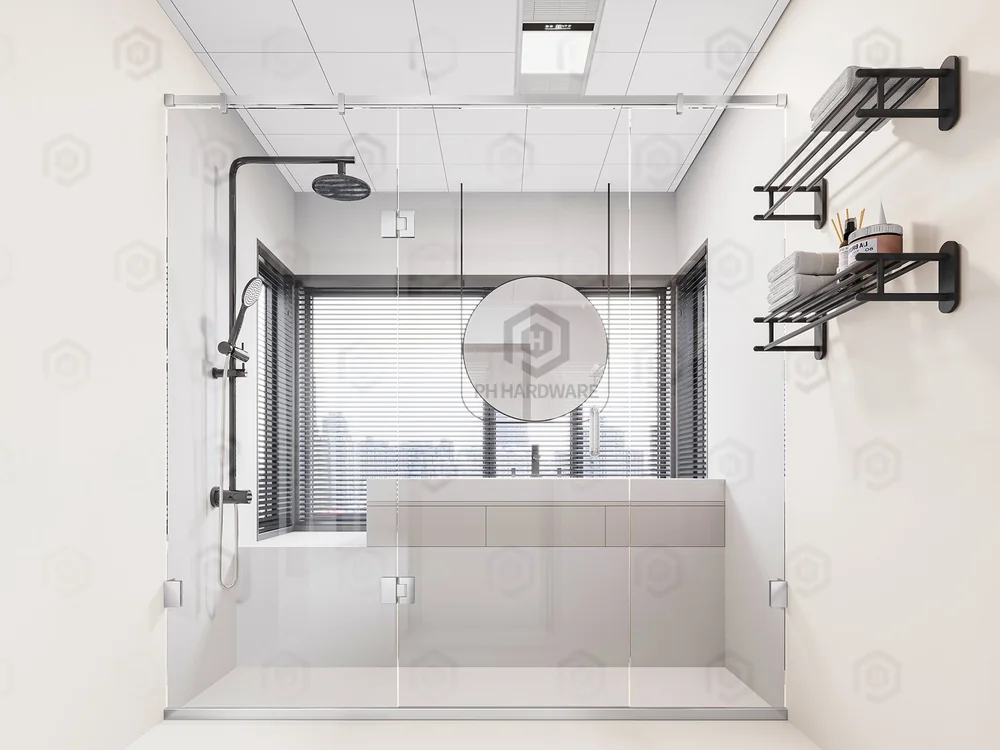
Large glass panels help create a spacious appearance while allowing more natural light into the bathroom.
However, wider and taller glass panels require careful consideration of glass weight, panel stability, fixing points, and structural support.
Minimalist Walk-In Shower Designs
Many modern bathrooms use fixed glass splash panels instead of traditional fully enclosed shower cabins.
This design reduces visible framing and creates a more open appearance.
Hardware such as glass clamps, U-channels, and support bars plays an important role in maintaining panel stability without compromising the minimalist design.
Accessibility and Low-Threshold Showers
Curbless and low-threshold shower designs are becoming increasingly relevant, particularly in bathrooms designed for long-term accessibility.
These installations require careful attention to floor drainage, water containment, glass positioning, and compatible sealing systems.
2. Why Does Large Frameless Glass Require the Right Hardware?
Large frameless shower panels are visually attractive, but their size and weight introduce important installation considerations.
The hardware must be selected according to:
- Glass panel height and width
- Actual glass thickness
- Total glass weight
- Fixing positions and support configuration
- Wall and floor substrate strength
- Door movement and operational loads
- Environmental conditions and maintenance requirements
For example, a large fixed glass panel installed along a wall has different support requirements from a hinged shower door or a fixed panel carrying an adjoining door.
Using hardware that is not designed for the actual application can lead to excessive glass movement, misalignment, loose fittings, or installation failures.
The National Glass Association (NGA), in its Frameless Shower Enclosure Design and Installation Manual, emphasizes proper mechanical support, suitable substrates, and appropriate fixing arrangements.
Therefore, hardware selection should always begin with the complete shower enclosure design rather than individual product appearance.
3. How to Choose the Right Hardware for Large Frameless Glass Panels
Different hardware components perform different functions. Understanding their applications helps installers and buyers select the correct combination.
3.1 Glass Clamps: Secure Fixing for Fixed Glass Panels
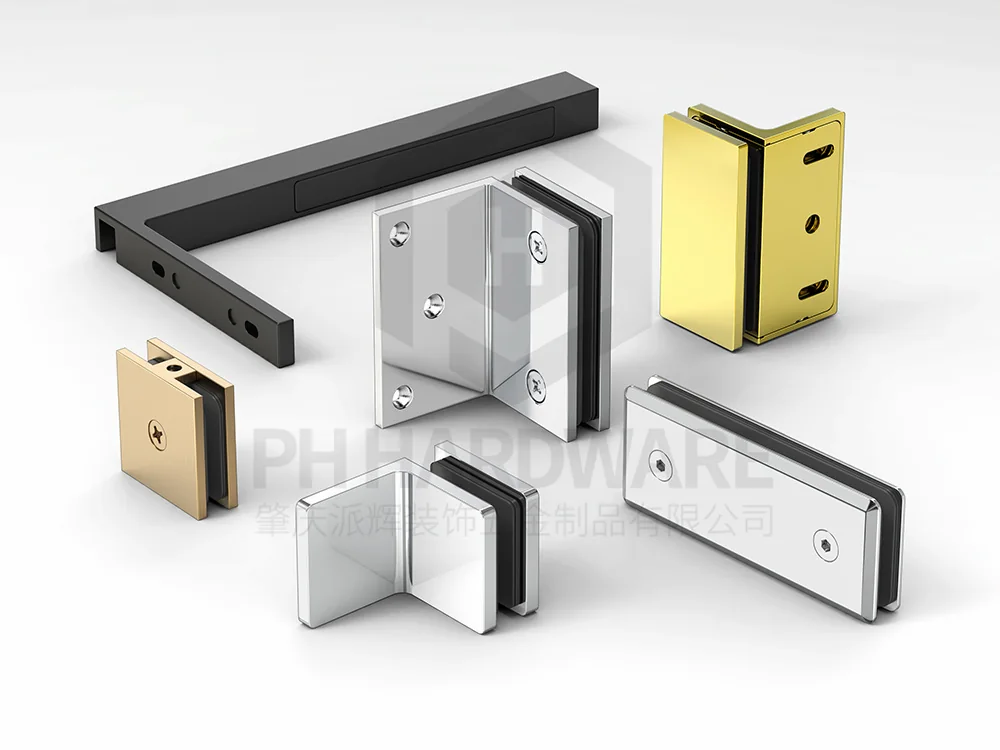
Glass clamps are widely used to secure fixed shower glass panels to walls or connect adjacent glass panels.
They are particularly suitable for minimalist frameless shower enclosures where reducing visible metal profiles is important.
Common applications include:
- Glass-to-wall connections
- Glass-to-glass connections
- 90-degree corner shower panels
- 135-degree shower enclosure configurations
When selecting glass clamps, consider the compatible glass thickness, gasket material, fixing method, and substrate requirements.
For larger glass panels, clamp quantity and positioning must follow the approved installation design and manufacturer's specifications.
Explore our Glass Clamps Collection for frameless shower glass applications.
3.2 Support Bars: Improve Fixed Panel Stability
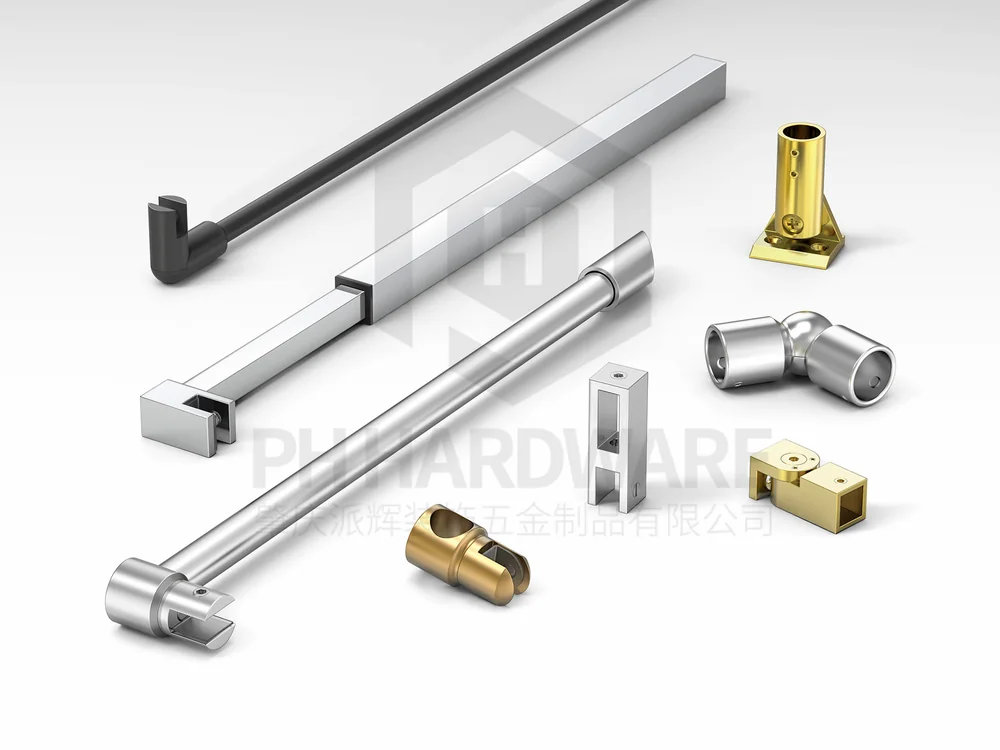
Support bars are important components in many large frameless walk-in shower installations.
They provide additional stabilization by connecting a glass panel to a wall, another glass panel, or a ceiling.
Common configurations include:
- Wall-to-glass horizontal support bars
- Glass-to-glass support bars
- Glass-to-ceiling support connections
- Adjustable support bar systems
A support bar can help control movement of a large fixed panel, particularly when the upper edge is unsupported.
However, it must be correctly specified and mechanically anchored to an adequate structure.
Explore our Support Bar & Connector Collection.
3.3 U-Channels: Continuous Edge Fixing and Sealing
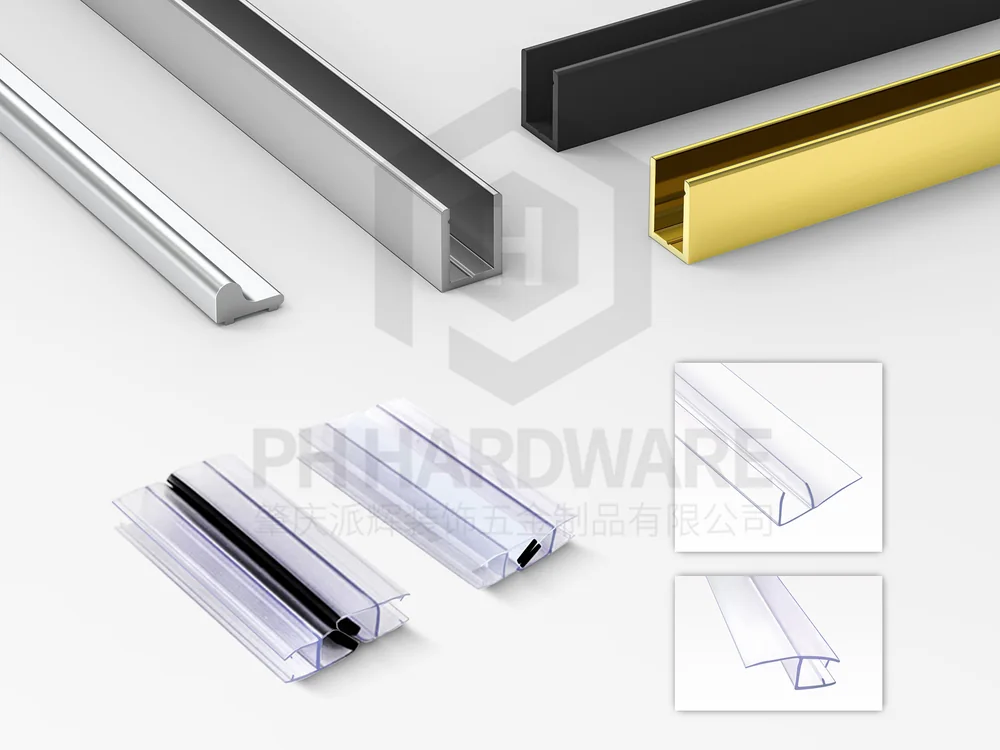
U-channels provide continuous support and capture along the edge of fixed glass panels.
They are commonly used at the bottom or side of frameless shower glass installations.
Compared with individual glass clamps, U-channels provide a continuous metal profile and can create a clean, consistent installation line.
When choosing a U-channel, consider:
- Internal channel dimensions
- Compatible glass thickness
- Suitable glazing gaskets or setting blocks
- Material and surface finish
- Mechanical fixing and waterproofing requirements
For wet-area installations, fastener penetrations and channel joints must be properly sealed to reduce water infiltration.
View our U-Channels, Thresholds & Clip Seals.
3.4 Shower Hinges: Choose According to Door Weight and Size
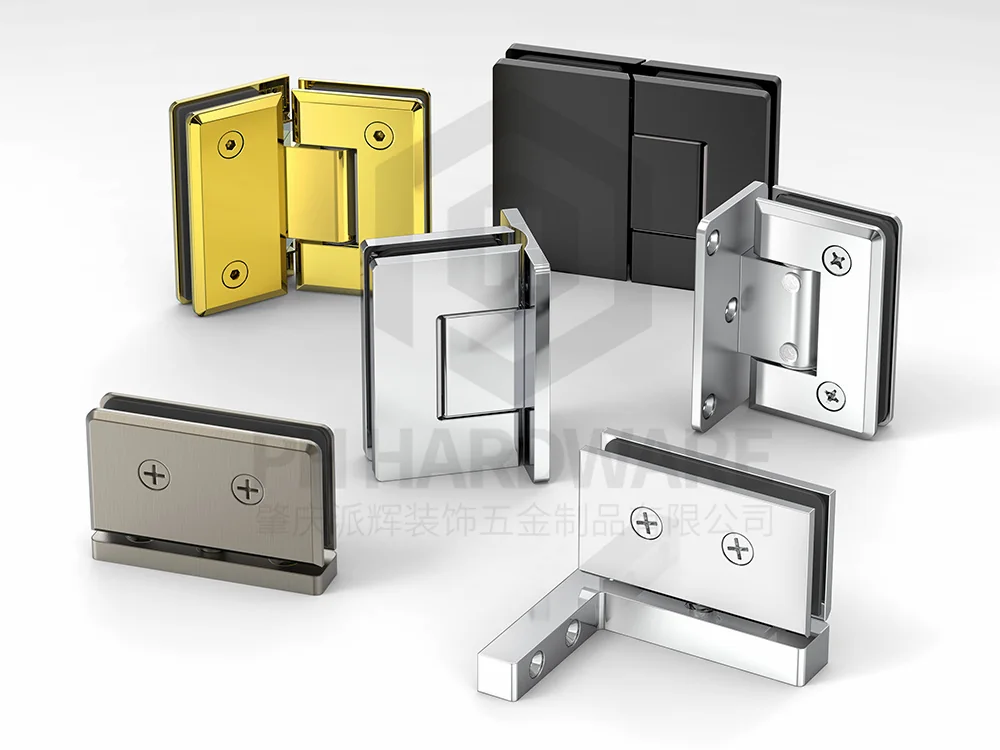
For walk-in showers that include a hinged glass door, selecting the correct shower hinges is essential.
Unlike fixed-panel clamps, hinges support a moving glass door and transfer operational loads to the wall or adjoining fixed panel.
Before selecting hinges, verify:
- Supported glass thickness
- Maximum door width and height
- Rated load capacity
- Number and positioning of hinges
- Opening angle and closing mechanism
- Glass-to-wall or glass-to-glass configuration
For larger or heavier doors, heavy-duty hinges may be required.
Do not select hinges based on appearance alone. The total door weight and manufacturer's load specifications must match the actual application.
Explore our Frameless Shower Glass Hinges.
For more information, read our guide: 8mm vs 10mm vs 12mm Tempered Glass: Which to Specify.
4. How to Select the Right Glass Thickness for Large Shower Panels
Glass thickness directly influences panel weight, rigidity, and hardware compatibility.
Common frameless shower glass specifications include 8mm, 10mm, and 12mm tempered glass.
| Glass Thickness | Typical Considerations |
|---|---|
| 8mm | Lighter panels and suitable configurations with compatible hardware |
| 10mm | A common specification for many frameless shower applications |
| 12mm | Heavier panels and applications requiring additional rigidity |
However, thicker glass is not automatically the best solution.
The correct specification depends on panel dimensions, unsupported edges, fixing arrangements, door loads, applicable safety requirements, and professional installation guidance.
All hardware must be compatible with the actual glass thickness.
For example, a glass clamp designed for 10mm glass should not be assumed suitable for 12mm glass without the correct gasket and manufacturer approval.
For large glass panels, consult the glass fabricator and hardware manufacturer before finalizing the design.
5. What Should Shower Hardware Buyers Consider Before Ordering?
For shower enclosure manufacturers, importers, and wholesale distributors, choosing the right supplier is just as important as selecting the right product.
Before placing an order, consider these factors:
1. Product Compatibility
Confirm that hinges, clamps, support bars, and channels are suitable for the specified glass thickness and installation configuration.
2. Material Quality
Check the actual material specifications and request relevant product information or test reports.
3. Surface Finish Consistency
Ensure that different hardware components have coordinated finishes, particularly for customized projects.
4. Technical Documentation
Request product drawings, installation instructions, dimensions, and load specifications where applicable.
5. OEM/ODM Manufacturing Capability
For distributors and shower enclosure brands, customized designs, private labeling, and packaging solutions can provide additional business value.
Working with an experienced shower hardware manufacturer helps simplify product sourcing and maintain consistent quality across different projects.
6. Frequently Asked Questions
What hardware is needed for a walk-in shower with large glass panels?
A typical installation may require glass clamps, U-channels, support bars, seals, and shower hinges if a hinged door is included. The exact combination depends on the panel dimensions and structural design.
Do large frameless shower panels always need support bars?
Not always. The need for additional support depends on panel dimensions, fixing arrangements, glass thickness, and structural conditions. A qualified glass professional should determine the appropriate support system.
Is 10mm or 12mm glass better for large walk-in showers?
Both can be suitable for different applications. The correct thickness depends on the glass panel dimensions, support configuration, and applicable safety requirements. Hardware compatibility must also be confirmed.
Can glass clamps and U-channels be used together?
Yes. They can be combined in the same installation to provide different fixing functions. For example, a U-channel may capture the bottom edge while glass clamps secure a vertical connection.
How do I choose a reliable shower hardware manufacturer?
Look for consistent manufacturing quality, accurate product specifications, suitable materials, surface finish options, technical support, and OEM/ODM capabilities.
Conclusion: Choosing the Right Hardware for the Future of Walk-In Showers
The growing popularity of larger walk-in showers and frameless glass enclosures creates new opportunities for shower hardware manufacturers and distributors.
As glass panels become larger and bathroom designs more personalized, selecting the correct hinges, clamps, support bars, and U-channels becomes increasingly important.
The best hardware solution is not simply the one with the most attractive appearance. It must also provide suitable mechanical support, reliable performance, and compatibility with the complete glass enclosure design.
Looking for a Reliable Frameless Shower Hardware Manufacturer?
PH Hardware has specialized in shower room hardware and glass fittings since 2003. We supply glass hinges, glass clamps, support bars, U-channels, and other frameless shower hardware to international distributors and brands.
With solid brass and stainless steel product options, multiple surface finishes, and OEM/ODM manufacturing services, we support customers looking for reliable shower hardware solutions.
Whether you are sourcing hardware for large walk-in shower panels, hotel bathroom projects, or wholesale distribution, our team is ready to help.
Contact PH Hardware for product catalogs, technical specifications, samples, and wholesale quotations.
Explore Our Products Contact Our Sales Team